

By Daniel Wells | Living Wisdom | May 16, 2026 | 13 min read
Informed by personal experience and published research in relationship psychology and behavioral science
I still remember the moment I found out.
It wasn’t dramatic. There was no confrontation, no raised voices, no single conversation where everything came out at once. It happened in pieces — something I noticed on my own, then something a mutual person confirmed — and by the time I had the full picture, the ground beneath me had already shifted.
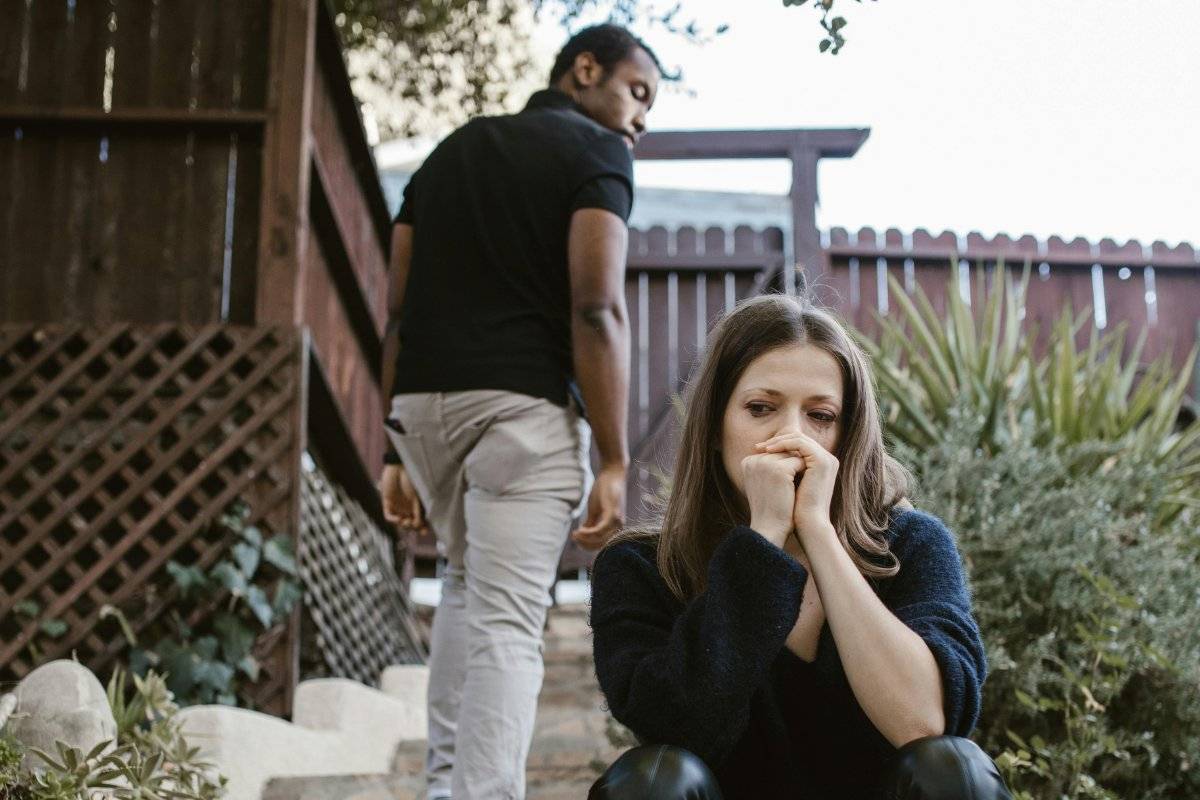
The feeling was immediate and physical. Shock first. Then, almost instantly, a wave of anger so intense it left me unable to think clearly. The person I had trusted — genuinely, completely trusted — had broken that trust. And the worst part wasn’t the act itself. It was realizing how long I hadn’t seen it.
I tried, for a while, to figure out if the relationship could be saved. I went through the motions of imagining what repair might look like. But eventually I arrived at a truth that was painful and also clarifying: some relationships cannot be rebuilt. Not because forgiveness is impossible — but because the foundation that would support rebuilding simply no longer exists.
That realization was the hardest and most honest thing I’ve ever accepted about a relationship. And it changed how I understand how to rebuild trust — and equally, how I understand when rebuilding isn’t the right answer.
This article covers both.
What Broken Trust Actually Does to You
Before we talk about how to rebuild trust in a relationship, it’s worth understanding what betrayal actually does — because the impact goes deeper than most people acknowledge.
Trust is not just a feeling. It’s a cognitive and emotional framework — the set of expectations and beliefs that allow you to feel safe with another person. When someone breaks that trust, they don’t just hurt you in the moment. They disrupt your ability to feel safe, not just with them, but often with others too.
The shock I felt in that moment is a recognized psychological response. Research on betrayal trauma — particularly work by Dr. Jennifer Freyd at the University of Oregon — shows that being betrayed by someone close to us activates the same neurological threat responses as physical danger. Your nervous system genuinely cannot distinguish between being physically threatened and having your trust violated by someone you depended on. Many people find that betrayal triggers patterns of overthinking — replaying events obsessively, searching for signs they missed, second-guessing everything they thought they knew. Read more at psychologytoday.com →
This is why the aftermath of betrayal often includes:
- Difficulty sleeping or concentrating
- Intrusive thoughts that replay the discovery
- Hypervigilance — scanning for signs of deception in other relationships
- A deep, destabilizing anger that doesn’t seem to go away
- Grief — not just for the relationship, but for the version of the relationship you believed you had
All of these are normal. They are not signs of weakness. They are signs that something genuinely significant happened to you — and that your mind and body are responding accordingly.
Can Trust Be Rebuilt? The Honest Answer
The question people almost always ask after a betrayal is: can we get past this? Can the relationship survive?
The honest answer is: sometimes yes, sometimes no. And the difference depends on factors that have nothing to do with how much you love each other.
Trust can be rebuilt when:
- The person who broke it takes full, undefended responsibility — without minimizing, deflecting, or making the betrayed person feel responsible
- They are genuinely willing to be transparent and patient through a long, uncomfortable process
- The relationship had a foundation of mutual respect and care that existed before the breach
- Both people are willing to do the difficult work — often with professional support
Trust cannot be rebuilt — or should not be attempted — when:
- The person who broke trust minimizes what happened or makes you feel you are overreacting
- The betrayal was part of a longer pattern of dishonesty that you are only now seeing clearly
- There is no genuine accountability — only apology without change
- You have already tried to rebuild and the same patterns have repeated
In my own experience, I eventually understood that the relationship I was trying to save had never been what I believed it was. The betrayal didn’t break a healthy relationship. It revealed one that had been built on a foundation I hadn’t examined closely enough. Recognizing this — clearly, without self-blame — was what made it possible to let go.
If you are recognizing signs of an unhealthy relationship alongside the betrayal you experienced, that context matters. It affects whether rebuilding is possible and whether it is wise.
How to Rebuild Trust in a Relationship: 7 Honest Steps
If you have decided that rebuilding is possible — and both people are committed to it — here is what that process actually requires. These steps are not quick. They are not linear. And they cannot be rushed.
Step 1: Stop Pretending It Didn’t Happen
The first and most common mistake people make after a betrayal is trying to move past it too quickly. They want the relationship back. They want the pain to stop. And so they agree, often too soon, to “put it behind them.”
This doesn’t work. What hasn’t been fully acknowledged cannot be fully healed. The person who was betrayed needs to be able to name what happened — clearly, completely, without softening — and have that naming received without defensiveness by the person who caused the harm.
This is not about punishment. It is about reality. The betrayal happened. It had an impact. Both things need to be acknowledged before anything else can begin.
What this looks like: The person who broke trust sits with the full weight of what they did — without rushing to apology, without pivoting to their own pain, without asking for forgiveness before it has been earned. They listen. They acknowledge. They do not explain it away.
Step 2: The Person Who Broke Trust Must Take Full Responsibility
Partial accountability is not accountability. “I’m sorry you feel that way” is not an apology. “I was going through a difficult time” is not a reason that transfers responsibility.
Full accountability means: I did this. It was wrong. I understand the impact it had on you. I am not going to ask you to minimize that impact to make me feel better about what I did.
This step is where many attempts to rebuild trust fail — because taking full responsibility is genuinely uncomfortable, and most people instinctively move to self-protection when they feel accused. But the relationship cannot move forward while the person who caused the harm is still partially defending the harm they caused.
According to research by Dr. John Gottman — one of the foremost researchers on relationship repair — genuine accountability, without defensiveness, is one of the strongest predictors of whether a relationship can recover from a significant breach. Read more at gottman.com →

Step 3: Transparency Must Replace Secrecy
Whatever allowed the betrayal to happen — secrecy, hidden behavior, withheld information — must be replaced with consistent transparency. Not for a week. Not until the immediate crisis has passed. Indefinitely, until trust has been genuinely rebuilt over time.
This is one of the most demanding parts of the process for the person who broke trust. Transparency feels invasive when you’re not used to it. It can feel like punishment. But it is not punishment — it is the practical requirement of rebuilding what was broken. You cannot rebuild trust while maintaining the conditions that allowed it to be broken.
What this looks like in practice: Open access to relevant information. Consistent follow-through on commitments. No more situations where the other person has to wonder what is actually true. Proactive honesty — sharing things before being asked, rather than only when cornered.
Step 4: The Betrayed Person Must Be Allowed to Grieve — Without a Timeline
One of the most damaging things that happens in attempted trust repair is pressure on the betrayed person to heal faster than they actually are healing.
Grief after betrayal is real. It has no fixed timeline. Some days will feel like progress; others will feel like starting over. The betrayed person may need to revisit what happened multiple times. They may need to ask the same questions more than once. They may have moments of anger months after the initial disclosure.
All of this is normal. None of it means the relationship cannot be repaired. It means grief is doing what grief does — moving through, not around.
What is not acceptable — and what will actively damage the rebuilding process — is the person who broke trust expressing frustration at how long the healing is taking, or making the betrayed person feel like a burden for still being affected.
What to do: If you are the person who broke trust, your role in this step is patience. Unconditional patience. You do not get to set the timeline for someone else’s healing from something you caused.
Step 5: Rebuild Safety Through Consistent Small Actions
Trust is not rebuilt through grand gestures or single conversations. It is rebuilt through the accumulation of small, consistent actions over a long period of time.
Every time a commitment is honored. Every time transparency is chosen over convenience. Every time the person who broke trust prioritizes the relationship over their own comfort. Every time they show up, reliably, in the ways they said they would.
These small consistent actions are what create new evidence — evidence that contradicts the breach and begins, slowly, to rebuild the neural pathways of safety that the betrayal disrupted.
This process takes longer than most people expect. Research on trauma-informed relationship repair suggests that meaningful trust rebuilding typically takes between one and two years of sustained, consistent behavior — not weeks or months. Read more at apa.org →
Learning how to set boundaries during this process is essential — for both people. The betrayed person needs clear limits around what behavior is and isn’t acceptable going forward. The person who broke trust needs to understand and honor those limits, consistently and without resentment.

Step 6: Consider Professional Support — Seriously
Rebuilding trust after a significant betrayal is genuinely difficult to do without professional support. The emotional complexity, the communication challenges, and the ingrained patterns that both people bring to the process are more than most couples or individuals can navigate alone.
A therapist trained in relationship repair — particularly one familiar with attachment theory or Gottman Method couples therapy — can provide the structure, tools, and neutral space that the process requires. This is not a sign that the relationship is failing. It is a sign that both people are taking seriously what it actually takes to repair it.
For individual support — particularly if you are the betrayed person working through the impact of what happened — individual therapy can be enormously valuable. The experience of betrayal often touches deeper wounds: questions of self-worth, patterns of who we choose to trust, and what we believe we deserve. Working through these with professional support can change not just how you recover from this relationship, but how you enter future ones.
Find a therapist at psychologytoday.com →
Step 7: Rebuild Your Relationship With Yourself First
This step is often overlooked in conversations about how to rebuild trust in a relationship — but it may be the most important.
Betrayal doesn’t just damage your trust in the other person. It often damages your trust in yourself. Your ability to read people. Your judgment. Your sense of what you deserve and what you can expect from those close to you.
Rebuilding that self-trust — the belief that you can navigate relationships, that your perceptions are reliable, that you are worthy of honesty and care — is not a side project. It is the foundation of everything else.
This is where learning how to build self confidence becomes directly relevant. The experience of betrayal can leave you doubting yourself in ways that go beyond the specific relationship. Reclaiming your sense of your own worth and your own judgment is part of the recovery — whether you ultimately rebuild the relationship or not.
When It’s Time to Let Go
I want to spend real time on this — because I think it is underserved in most conversations about trust repair, and because it was the most important thing I had to learn.
Sometimes the most honest answer to “can we rebuild this?” is: no. Not because you don’t care. Not because you haven’t tried. But because the evidence, evaluated honestly, tells you that rebuilding is not possible — or not wise.
It may be time to let go when:
- The person who broke trust has not taken genuine, undefended accountability — even after time and conversation
- The betrayal was not an isolated incident but part of a pattern you are only now seeing clearly
- You have already tried to rebuild and found yourself in the same position again
- The cost of staying — to your mental health, your sense of self, your ability to trust your own perceptions — is greater than the cost of leaving
- You realize, as I did, that the relationship you thought you had was not the relationship that actually existed
Letting go of a relationship after betrayal is not failure. It is not giving up. It is sometimes the most self-respecting decision available — the recognition that some things, once broken, reveal themselves to have been built on a foundation that could not hold.
Grief will follow. That grief is real and deserves to be honored. But on the other side of it is the possibility of relationships built on honesty — where trust is not assumed but earned, where vulnerability is met with care, where you do not have to question whether the person beside you is actually who they appear to be.
That possibility is worth protecting. Even when protecting it means walking away from something you wanted to keep.
How to Rebuild Trust in Yourself After a Betrayal
Whether the relationship ends or continues, the work of rebuilding trust in yourself is essential — and it is yours alone to do.
Start by acknowledging what happened without turning it into a verdict on your judgment. Being betrayed does not mean you were naive or foolish. It means you trusted someone who proved unworthy of that trust. Those are not the same thing.
Be patient with the hypervigilance that follows. For a while, you may find yourself scanning for signs of deception in other relationships — reading too much into small things, struggling to take people at face value. This is your nervous system doing its job. With time and intentional practice, it will recalibrate.
Invest deliberately in relationships that feel safe. Spend time with people who have shown you, consistently over time, that they are trustworthy. Let those relationships provide evidence that trust is still possible — that not everyone operates the way the person who hurt you did.
And give yourself time. Not a fixed amount — just time. The kind of wound that betrayal leaves does not heal on a schedule. But it does heal. Read more about recovery at mind.org.uk →

Frequently Asked Questions About How to Rebuild Trust
How long does it take to rebuild trust after a betrayal? There is no fixed timeline — but research consistently suggests that meaningful trust rebuilding takes at minimum one to two years of sustained, consistent behavior. Rushing the process almost always undermines it.
Can trust be fully restored after a serious betrayal? Yes — but only when both conditions are met: the person who broke trust takes full accountability and demonstrates consistent change over time, and the betrayed person is genuinely willing to work through the process. Neither alone is sufficient.
What if the person who broke trust won’t take responsibility? Without genuine accountability, rebuilding is not possible. You cannot rebuild a foundation with someone who won’t acknowledge that it was broken. This is one of the clearest signs that letting go may be the wiser path.
Is it normal to still feel angry months after the betrayal? Completely normal. Anger after betrayal is not a sign that you haven’t forgiven or that you’re holding a grudge. It is a natural part of grief. What matters is that the anger is moving — that it is not permanently consuming you, but processing through you.
Should I tell others about what happened? This is a personal decision. Seeking support from trusted people who can hold the information with care is reasonable and often helpful. Broadcasting it widely — particularly in moments of intense emotion — can complicate things, especially if the relationship is being repaired. Choose carefully who you confide in.
How do I know if I’ve truly forgiven someone? Forgiveness is not a feeling — it’s a decision you make repeatedly. It doesn’t mean what happened was acceptable. It means you are choosing not to carry the weight of it as a permanent burden. You can forgive someone and still choose not to maintain a relationship with them. The two are not the same thing.
A Final Word
What I learned from my own experience with betrayal is not that trust is too dangerous to extend — but that it deserves to be extended thoughtfully.
The shock and anger I felt in that moment of discovery were real and valid. So was the grief that followed the ending of the relationship. And so, eventually, was the clarity — the recognition that some relationships reveal themselves, through their endings, to have been teaching us something important about what we actually need and deserve.
If you are in the middle of this right now — if the betrayal is recent, the wound still raw, the path forward unclear — I want you to know that what you are feeling is proportionate to what happened. You are not overreacting. You are not weak. You are a person who trusted, was hurt, and is now trying to find their way through something genuinely hard.
Whether that path leads through repair or through release, you deserve to walk it with honesty — about what happened, about what is possible, and about what you need to be okay.
— Daniel Wells, Living Wisdom
Further Reading on Living Wisdom:
- 10 Signs of an Unhealthy Relationship You Should Never Ignore
- How to Set Boundaries: When You Say Yes but Mean No
- How to Build Self Confidence: 7 Powerful Steps From Within
- Overthinking Therapy: 7 Proven Techniques to Finally Quiet Your Mind
Medical Disclaimer: This article is for informational and educational purposes only. It reflects the author’s personal experience combined with published psychological research. It is not a substitute for professional medical advice, diagnosis, or treatment. If you are experiencing significant mental health difficulties, please consult a qualified mental health professional.
Sources & References:
- Freyd, J. J. (1996). Betrayal Trauma: The Logic of Forgetting Childhood Abuse. Harvard University Press.
- Gottman, J. M., & Silver, N. (1999). The Seven Principles for Making Marriage Work. Crown Publishers.
- Brown, B. (2010). The Gifts of Imperfection. Hazelden Publishing.
- Herman, J. L. (1992). Trauma and Recovery. Basic Books.
- Johnson, S. M. (2008). Hold Me Tight: Seven Conversations for a Lifetime of Love. Little, Brown and Company.
- American Psychological Association. Relationships and trust. apa.org/topics/relationships
- Psychology Today. Betrayal. psychologytoday.com
- The Gottman Institute. Building trust and commitment. gottman.com
- Mind. Relationships and mental health. mind.org.uk
- Psychology Today. Find a therapist. psychologytoday.com
- NHS. How to improve your relationships. nhs.uk




[…] long periods of sitting: Sitting for too long can make you feel sluggish. Make sure to stand up, stretch, and move […]